DCC - Computer Science Department
Overview
UFMG Computer Science undergraduate and graduate courses figures at the top level among the Brazilian ones according to the Brazilian Ministry of Education. Notably, nationally, UFMG's Computer Science graduate course performs best conforming to many criteria. Globally, its scientific production follows the same pattern as that of the best graduate programs in the world.
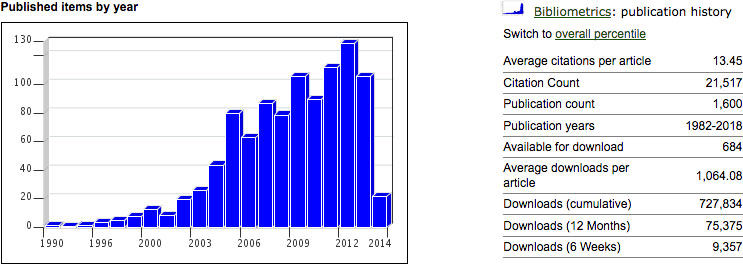
UFMG Computer Science research has been growing exponentially and figures among the top worldwide research institutions per the Association for Computing Machinery.
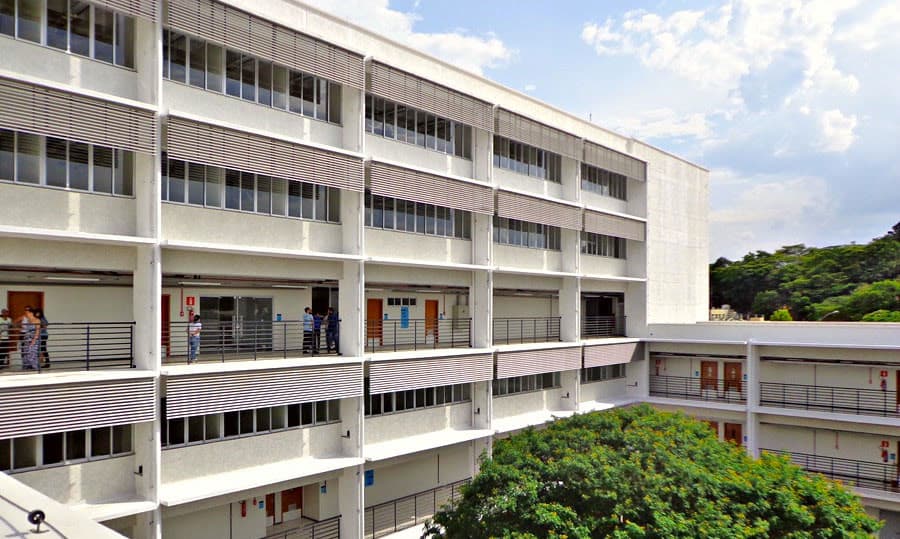
DCC: UFMG Computer Science Department
 The Computer Science Department (Departamento de Ciência da Computação, DCC) of the Federal University of Minas Gerais (Universidade Federal de Minas Gerais, UFMG) is, today, the largest academic computer science center of the state of Minas Gerais and one of the topmost in Brazil. The Department was created in 1976, as the result of research activities that started almost ten years before. By the late sixties, UFMG had a Computer Science Center (CECOM) in operation, which, in 1972, generated the Computer Science and Statistics Department, which later, in 1976, split itself into the Statistic Department and the CS Department, with 25 professors, a number that has increased steeply since then.
DCC hosts three undergraduate programs, on Computer Science, Computational Mathematics and Information Systems, and a graduate program which awards M.Sc. and Ph.D. degrees. The Computer Science undergraduate and graduate programs are ranked at the top of the Brazilian Education Ministry evaluation systems. This recognition is consistent with the high marks and excellent results obtained by the Department in its research activities, which are both extensive and highly praised.
The Department is the main Internet provider for research organizations in the state of Minas Gerais. Currently, DCC is connected to the Internet through redundant 10 Gbps links and maintains a local area network supported by 30 servers. The teaching and research facilities include over 600 workstations, distributed across lecturing rooms and research laboratories. The Department is also associated to a high performance computing center (Centro Nacional de Processamento de Alto Desempenho, CENAPAD), which focuses on computationally intensive tasks, such as weather prediction. CENAPAD’s main supercomputer currently has about 850 parallel cores, reaching a theoretical processing capacity of 9 Tflops.
The Department’s faculty body includes 52 PhDs, who graduated from high-level institutions from various parts of the world. DCC’s community also includes over 30 people in the administrative staff, 38 system analysts providing services to the industry, around 40 graduate teaching assistants and over 40 undergraduate interns.
Industrial and Academic Partners
In addition to teaching and research, the Department also contributes to the Brazilian society through partnerships with other institutions. A number of initiatives from the department have contributed to make this institution a catalyst of changes in Brazil, and an attractor of academic and industrial partners. One of these initiatives is the National Institute of Science and Technology for the Web (InWeb), which has been created in the second half of 2009 as a center of study of Web-related topics. InWeb, hosted at UFMG, includes participants from universities such as the Federal University of Rio Grande do Sul and the Federal University of Amazonas. Some professors of the Department also participate in at least three other National Institutes for Science and Research in other areas of knowledge.
The Department of Computer Science hosts a software house, and has important connections with the industry. This software house - the Synergia laboratory - provides support and development to the private market, and takes in over 70 software engineers, among faculty, staff and student interns. This laboratory has clients such as the Brazilian Ministry of Social Security, telecommunications companies and the Minas Gerais state government. The Department of Computer Science also has connections with many companies in the field of information technology. For instance, the Department maintains a joint research and development program with HP Labs, through HP Brazil.
Innovative companies have been created and spun off by professors and students of the Department. Among the companies hatched inside DCC are Akwan Information Technologies, in the field of Web searching, and Miner Technology Group, in the field of Web data mining. The former was sold to Google Inc. in 2005 and became the basis of the Google Research Center in Brazil, and the latter was sold to one of the largest Brazilian communications groups (Folha de São Paulo) in 1999.
Research
The Department of Computer Science is nationally recognized as a center of excellence in research. Its graduate program is ranked level 7 (the highest) by CAPES, a federal agency for accreditation of graduate programs. Among the 48 Brazilian graduate programs on computer science, only two others are ranked at the same level, and only five are ranked level 6.
UFMG has been awarding M.Sc degrees in Computer Science since 1974, under the responsibility of the Computer Science Department. Recently, the 803rd masters degree has been awarded, and the Department receives 55 M.Sc new prospective students every year. There are 120 graduate students currently enrolled. The Ph.D. program, more recent, began in 1991, and has awarded 111 phd degrees. It currently includes 61 students, with approximately 15 students enrolling the program every year. DCC also participates in a PhD program on Bioinformatics.
The research staff enjoys great diversity. Out of the 52 Ph.D. professors, 38 got their degrees abroad. Alma maters include Stanford, Princeton, Carnegie Mellon, UCLA, U. Penn, Oxford, Manchester, ETH, among many others. The Department regularly receives a number of visiting researchers; there are currently 3 visitors, along with 2 post-doctoral associates.
The Department comprises 28 research and development laboratories. These laboratories deal with fields as varied as artificial intelligence, bio-informatics, computer graphics, computer networks, databases, data mining, parallel and distributed processing, and robotics, among many other areas. Most of these laboratories are involved in research cooperation of international scope. The Department has 11 official research liaisons with international institutions, including U. Penn, Stanford, Oxford and INRIA.
In addition to the projects funded by international cooperation, the Department currently hosts over 40 projects funded by CNPq, the Brazilian federal agency in charge of fostering research and development, and over 30 projects funded by FAPEMIG, the research funding agency of the state of Minas Gerais. There are also 3 projects funded by FINEP, a public agency, and 8 projects funded by UFMG itself.
Teaching
The BS in Computer Science program started in 1978 and has awarded 1,500 BS degrees since. The BS in Computational Mathematics program started in 1999, and admits 20 new students per year. The BS in Information Science is more recent, started in 2005, handing in the first batch of graduates in 2009. The Department receives annually 80 new students in Computer Science, and has 371 students enrolled. Computational Math admits 20 new students per year and Information Science, currently counting 162 undergrads, also receives 80 students per year. In addition to providing majors in Computer Science and Information Science, the Department also offers basic programming courses to a vast range of Engineering and Math programs from UFMG. Currently, the total number of students who take courses offered by the Computer Science Department goes well beyond 2,500.
The Department has achieved important accomplishments, such as the best marks among all the Brazilian Computer Science courses in the last (2008) Brazilian National Student Performance Exam (Exame Nacional de Desempenho de Estudantes, ENADE). The Computer Science undergraduate program was ranked 5th overall according to ENADE, as compared to all courses in all areas, including human and biological sciences.
The Computer Science Department also offers an extensive professional training program. Differently from the undergraduate courses, which require a special entrance exam, the program for professionals is open to the community, and is specially tailored for companies. The Department offers courses in software engineering, database design, object-oriented programming and computer networking.